by Apostolos Kotsabasis
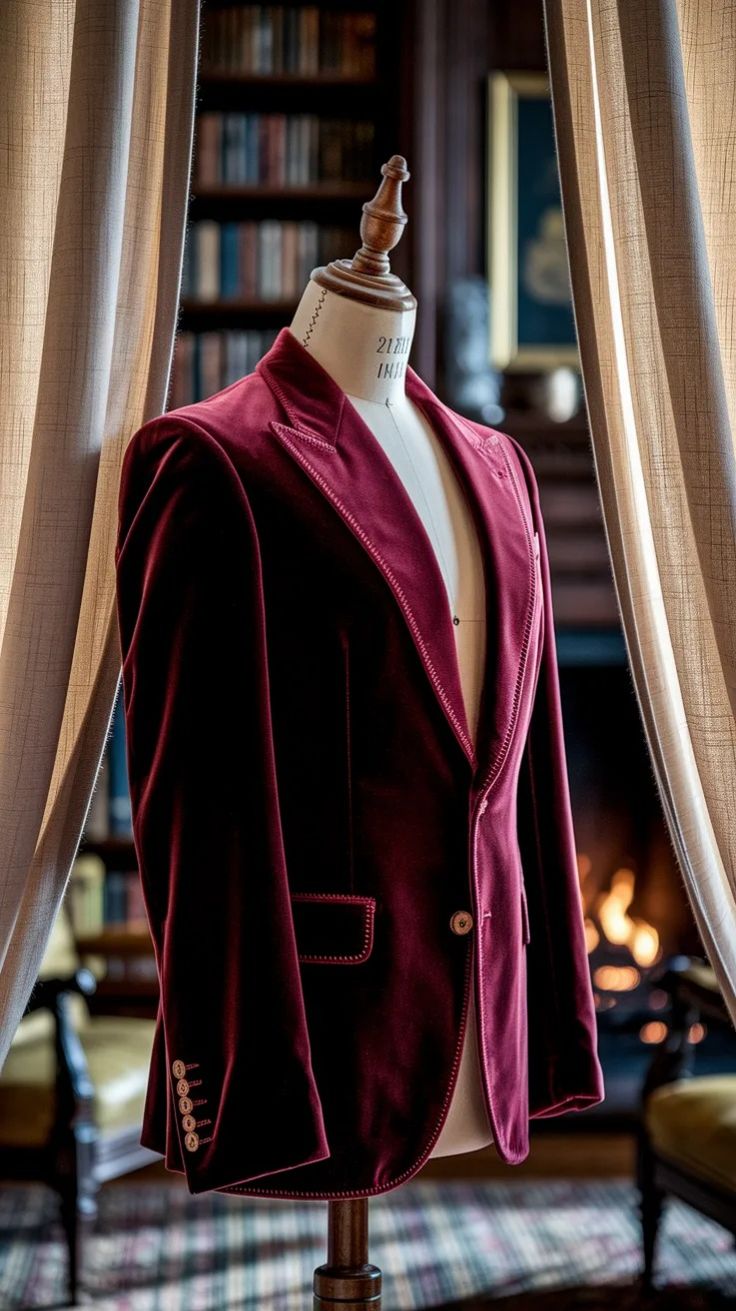
The velvet jacket enters the room like a ghost from another era, a reminder that men once believed in the theatre of life.
It appears in the late 18th century, with aristocrats dressed in luxurious fabrics, candlelight reflecting its glow, the jacket itself a performance. Later, it passes into the 19th century, into dark cafés with bohemian poets — velvet as rebellion, velvet as intoxication.
In the 20th century, it is Hollywood. Fred Astaire moves with velvet softness across the stage — actors in smoke-filled salons, velvet jackets worn with cigars and martinis. The garment has become a cinematic cliché, yet it remains dangerous, alive.
Over time, the velvet jacket becomes a statement not of wealth, but of memory. A man puts it on and remembers nights that blur into mornings, conversations that dissolve into silence. The jacket absorbs everything, holding fragments of a good life. It is tangible, heavy, almost suffocating — but that is the point: velvet insists on presence. It does not fade into the background. It demands to be noticed.
In the 1980s, it is the downtown clubs, men in velvet passing through neon lights, the jacket both armor and confession. David Bowie lends it a luminous aura — and receives one in return. In the 1990s, it becomes ironic, worn with sneakers, a nod to history and a refusal to take it too seriously.
And after all this, then and now, it is essential. A man’s wardrobe without velvet feels incomplete, deprived of narrative. The jacket is not merely a garment; it is a timeline, a reminder that style is more than appearance. It is the accumulation of singular nights, images, and personal moments made precious for the simple reason that you lived them wearing a fabric that refuses to forget.
And somewhere in the background, a band is playing My Way.