by Apostolos Kotsabasis
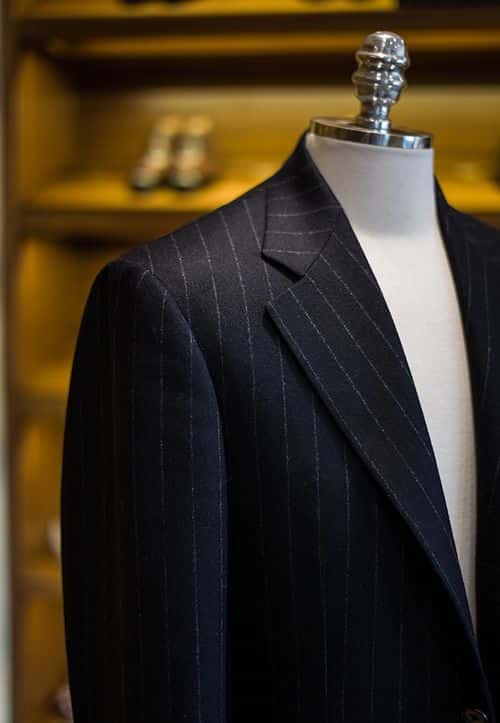
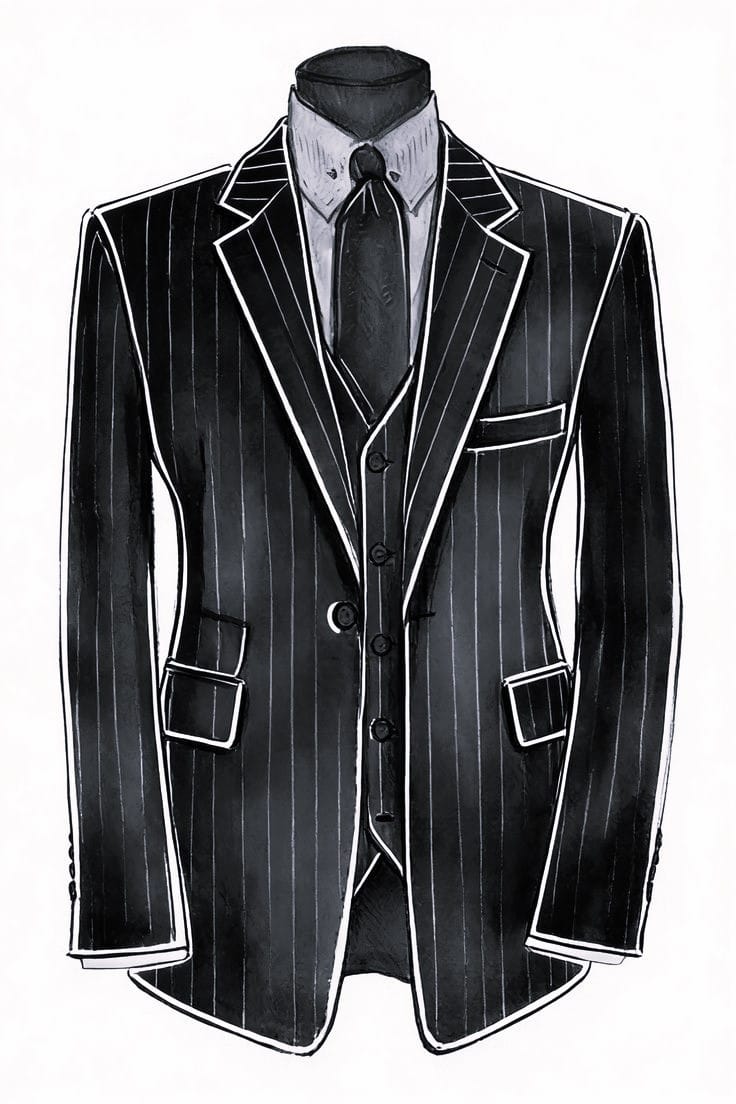
The pinstripe suit appeared quietly – expensive, inevitable. First in late-19th-century London, where Victorian bankers needed a way to mark their territory without saying a word. Thin white lines, set at precise intervals, stitched into trousers of black wool. Each bank’s pattern was a barcode for the city, identifying employees and directors the same way a logo identifies a brand in a boardroom full of similar faces. No one remembers who first designed the stripe, but everyone agreed: it looked like money, it sounded like power.
Then it crossed the Atlantic. By the 1920s, Prohibition turned the pattern into something bolder. American gangsters – Al Capone, Lucky Luciano – wore pinstripe suits while drinking illegal whiskey in speakeasies, the vertical lines elongating their silhouettes, making them look taller, slimmer, more dangerous. The suit signaled respectability; the tommy gun signaled the opposite. Wall Street noticed. Brokers and tycoons adopted it, blurring the line between finance and crime until the distinction felt academic. Then Hollywood added the gloss, and jazz provided the soundtrack to the myth’s packaging.
Decades later, it still hangs in men’s wardrobes like an uncomfortable question: a suit of power or a uniform? The stripes remain – faint accusations of ambition, greed, the American dream taking a slightly different turn. Wear one, whether you’re closing deals or pretending to. Either way, the fabric remembers everything.