by Apostolos Kotsabasis
Then came Maradona. Mexico again, 1986. The Hand of God and the Goal of the Century. A short, stocky boy from the slums who turned the pitch into his own stage for revenge. He ran, he fell, he rose again, while everyone around him seemed like extras in a film whose script only he had ever read. It is the same strange feeling you get when watching yourself on video: he is the hero; you are merely the spectator.
Today, Messi and Ronaldo continue the same story in 4K. Messi moves with quiet, almost indifferent elegance, as though drifting through a dream where goals arrive of their own accord. Ronaldo embodies relentless perfection—his physique, his supercars, the carefully crafted image he markets better than any manager ever could. Both understand that the World Cup is no longer just football. It is a brand. It is a story retold to fill the empty spaces.
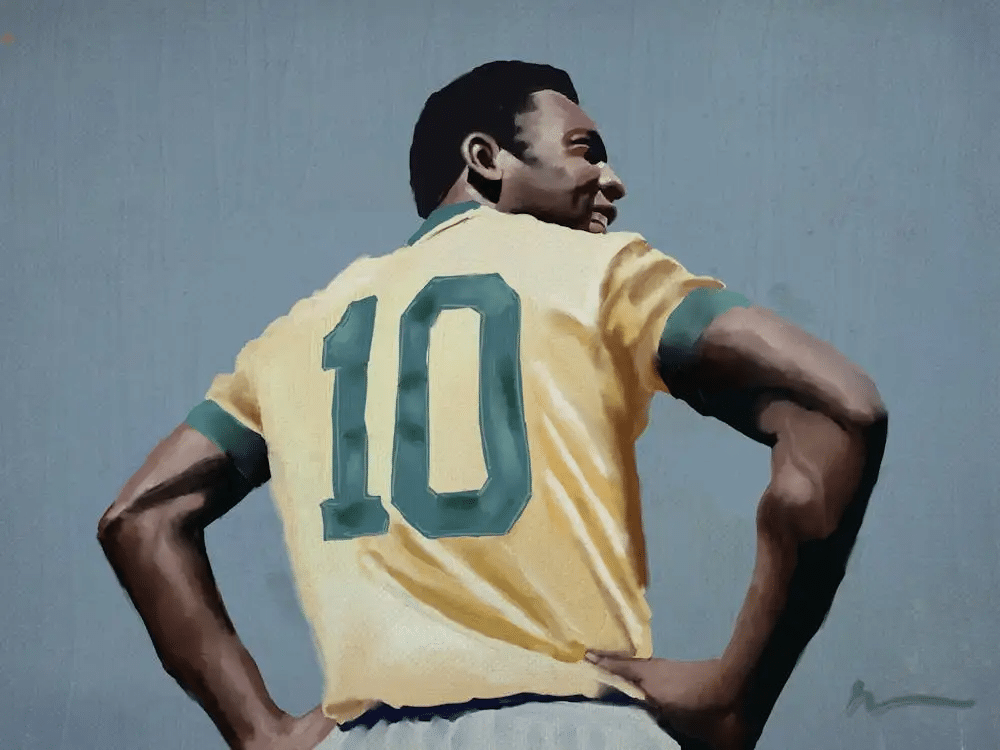
The legends who came before them—Gordon Banks, who denied Pelé the impossible; Franz Beckenbauer, who strolled across the pitch as though it were his own living room; Maldini with his icy perfection; Zidane, whose head became a weapon; Cruyff, who reinvented the game before the world even realised it—linger like ghosts over every new tournament. Garrincha, whose crooked legs danced; Müller, who scored with mechanical precision; Baggio, with the gaze of a lost poet.
They are all heroes in a game that never truly ends. And we, the spectators, keep watching. We count the goals, remember the names, retell the stories—caught in an endless cycle that continues to connect generations, cultures, and eras.