by Giorgos Archimandritis
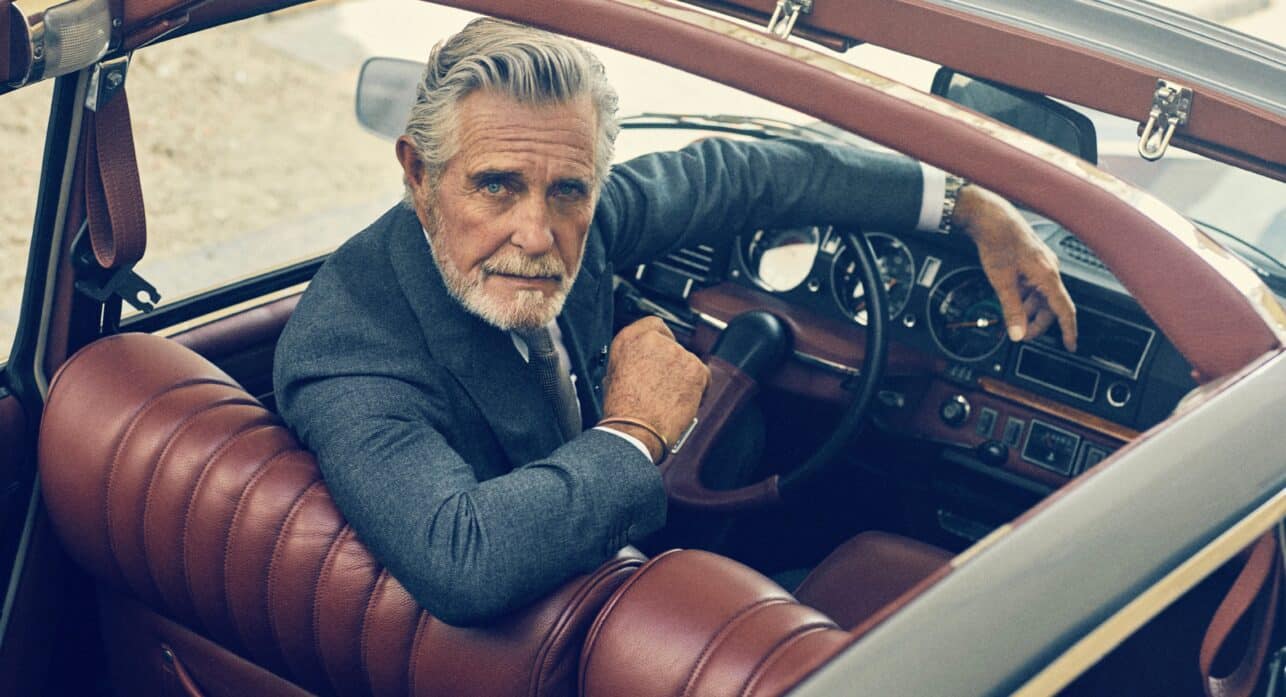
Paris, rue St Honoré. During a brief stop in the City of Light, Bernard Fouquet – one of the most recognizable and long-standing male models – talks to us about his profession, menswear, and the evolution of fashion, while also sharing his love for the sea and travel.
How did your career as a model begin?
It was pure coincidence. I had left my hometown, Royan on the Atlantic coast, and come to Paris with a surfboard, planning to head to California to surf. While walking around Paris, I ran into an acquaintance who worked for a prêt-à-porter company and later became an agent for female models. She introduced me to my first agency. It was 1976. I did a test shoot and within ten days I passed my first casting and landed my first job. Since it was well paid, I thought that instead of leaving immediately for California, it would be worth continuing for a while to see how things would develop. That’s how it all began. I went to California much later, and in fact I stayed in the U.S. for a full 26 years.
How do you view the evolution of fashion over the past decades?
I really loved the entire period from the ’70s, ’80s, ’90s up to the 2000s. I believe that back then there were fabrics with character, beautiful lines, and well-tailored garments. Today, street style dominates more; everything is a bit mixed together, which doesn’t particularly suit my personal taste. Of course, there are still wonderful pieces today; they just no longer correspond to what I personally love about clothing. For example, when it comes to jackets, I prefer English tailoring. I adore English tweeds—the British excel in this area. Italian cuts are a bit slimmer, but I love their style and fabrics.
What should a man’s wardrobe include?
I’ll start with formalwear: a tuxedo is essential in my opinion. A beautiful flannel suit is always excellent, as is a dark blue blazer and tweed jackets. I’m particularly fond of jackets with a herringbone weave. I also prefer double vents at the back rather than a single one. And of course, good shoes are necessary. Clothing is elevated not only by good tailoring, but also by a beautiful pair of shoes and a quality belt. As for colors, I personally prefer beige tones and I love khaki. I’m not particularly fond of bright colors for men. I like faded oranges, khaki cashmere sweaters. I adore cashmere – a collection of cashmere sweaters is always an excellent choice.
Which moments would you single out in your career as a model?
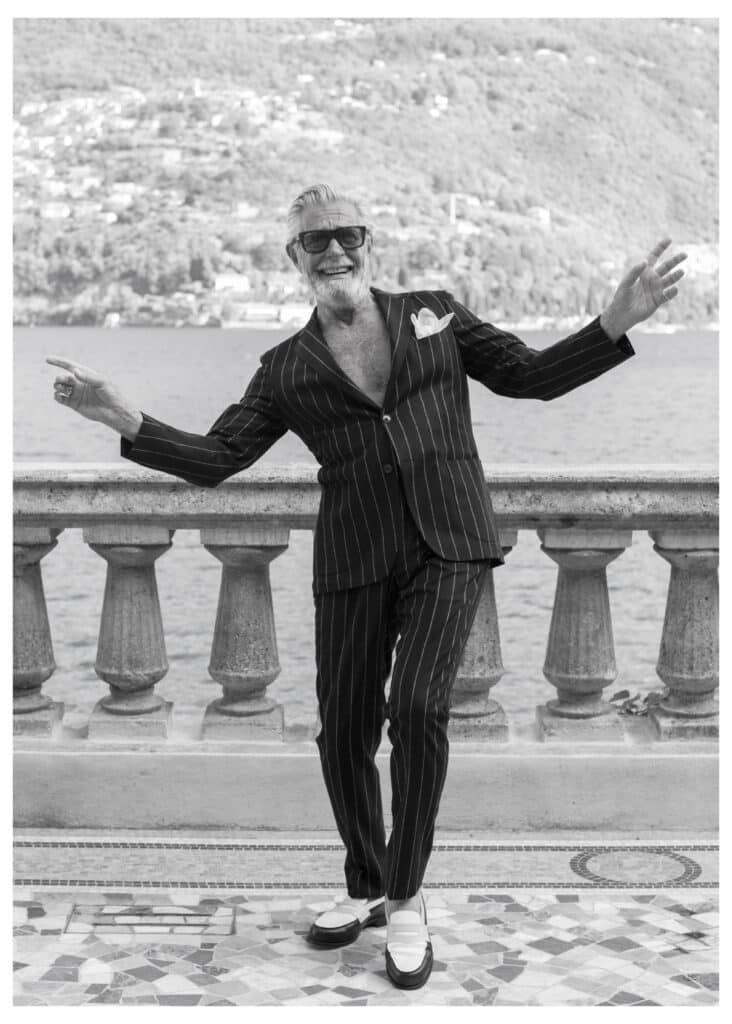
For me, the most important thing was working with great photographers. I was fortunate to collaborate with Peter Lindbergh, Annie Leibovitz, Craig McDean, and Paolo Roversi. It’s a great joy to work with such people and to see how their beautiful photographs are born. Of course, being in front of the camera isn’t easy. Especially when you’re starting out, you hesitate a bit and wonder what you’re supposed to do. Over time, however, being photographed becomes a pleasure. You try to give your best through your posture, the way you move, suggesting different poses and expressions – sometimes smiling, sometimes serious. It’s a job you learn by doing. When you’re a beginner, you watch the more experienced models on the same set, you take elements from the way they work and then adapt them to your own personality. It’s not simple. It requires a lot of serious work.
What are the greatest pleasures this profession offers you?
Travel. You discover new places, new people. Every time I go somewhere unfamiliar, the first thing I do is drop my bags and put on walking shoes. I like to see a country’s culture, the way its people live. Sometimes you find yourself in incredible places. In South Africa, for example, I often went to downtown Cape Town. It was a bit dangerous, but I liked seeing what was happening there. Another place I truly loved is the Philippines – a real paradise. When I was in Miami, I also worked frequently on the Caribbean islands. I’ve worked in China and in other countries that are wonderful to discover. I really love this cosmopolitan aspect of my work – meeting people from different countries, even if you’re never going to see them again. What matters is the moment; when it’s good, the exchange is rich. I always loved that very much. And of course, seeing incredible landscapes.

What is your favorite landscape?
I am a person of the sea. I was born and raised next to it, and my home is almost on the beach. I love the ocean, its open horizon. The ocean, for me, means freedom. I no longer surf now, but when I was younger I loved it. Being in the water, in the waves – this always appealed to me. It’s wonderful to stand upright on a wave. It’s not about domination; it’s the miracle of following it in its movement and its path. I’ve always loved sports. Now I do intense athletic walking. I ran for many years, but now I find that walking has more benefits – it’s gentler on the body and more pleasant. I also play golf. I’ve done all kinds of sports: water skiing, snow skiing, and a lot of horseback riding. I’ve done everything.
What does elegance mean to you?
For me, elegance is a way of being. It’s not found in the clothes someone wears, but in the way they wear them. Someone else can wear exactly the same clothes and they may say nothing on them. I think it’s a kind of aura, a gift. And I believe it’s more innate than acquired. It’s a way of being, as I said – a way of moving, a way of behaving. It’s not just about clothing; it’s about how you speak, how you treat others. Respect for your surroundings. That’s very important. You don’t have to agree with someone, but you can express your opinion with courtesy. And if you don’t like something, you can simply leave, saying, “I don’t belong here.” That, to me, is elegance.
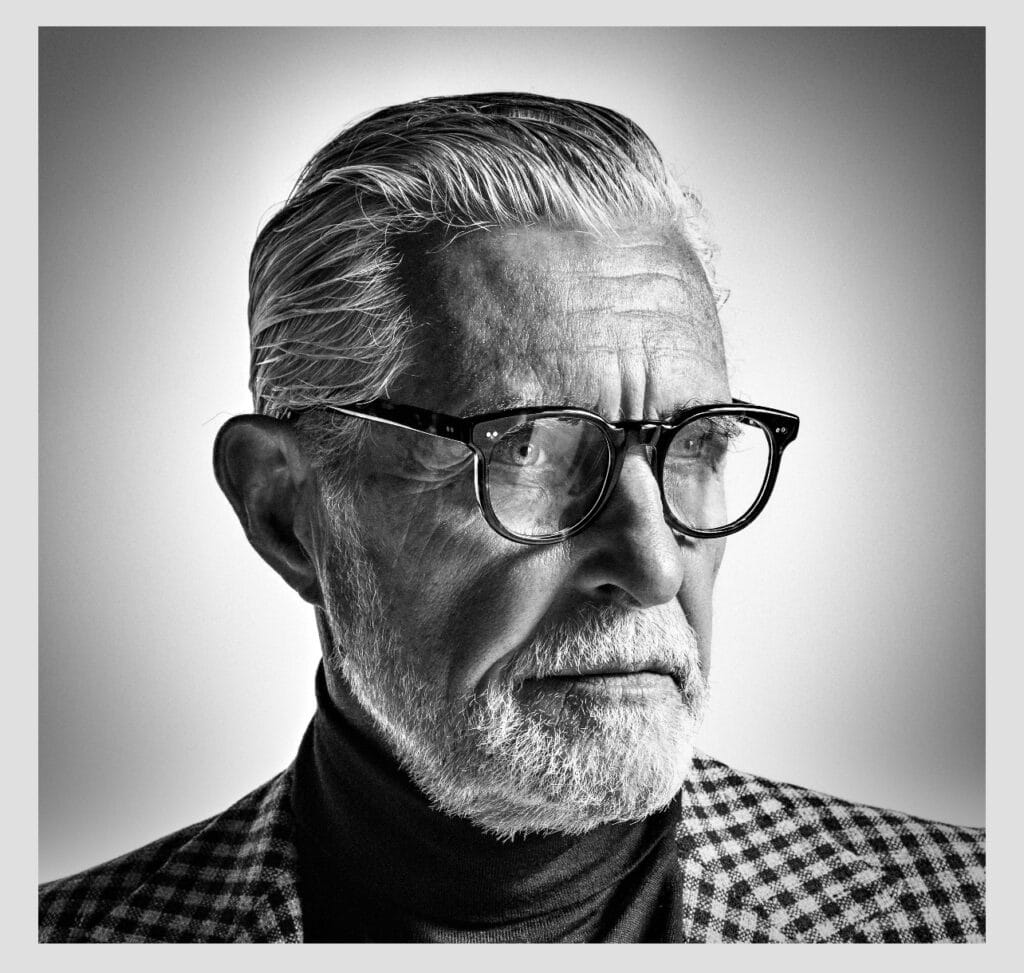
Photos Courtesy of Bernard Fouquet Portfolio
 Popular