by Apostolos Kotsampasis
After a test flight went wrong, pilot “Shorty” Schroeder removed his fogged-up goggles at high altitude—his eyes froze and his vision blurred. Lieutenant John Macready pushed for better protection.
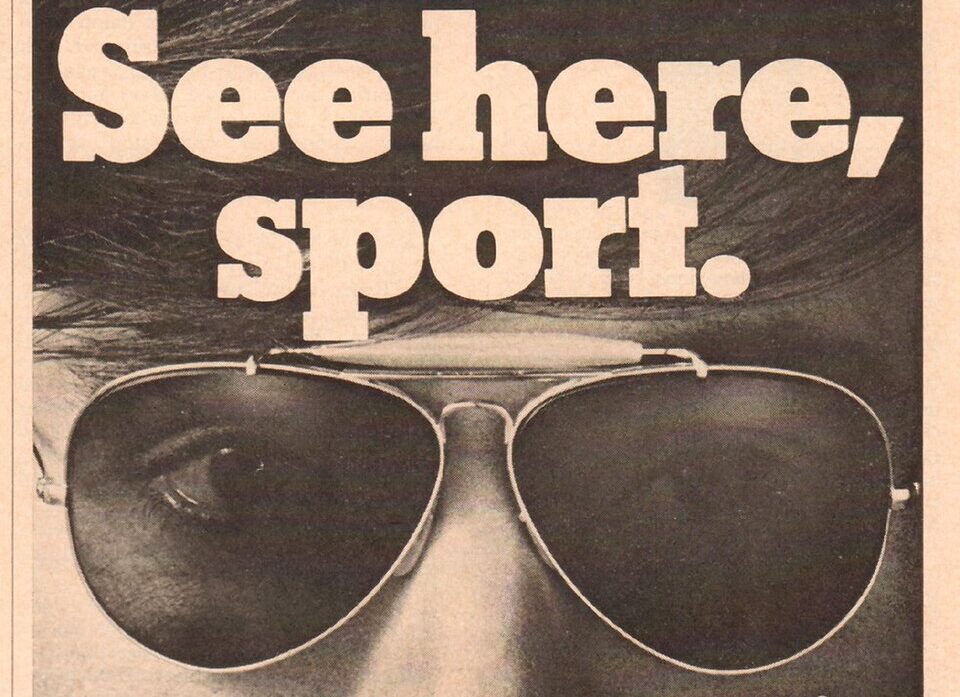
The result? Teardrop-shaped lenses made of green glass, a metal frame, a double bridge—designed to block the sun’s rays, cover the peripheral field of vision, and still allow clear access to cockpit instruments. Bausch & Lomb developed them in the mid-1930s for U.S. Army pilots. They entered military use in 1937, were patented as Ray-Ban Aviators in 1939, and later crossed into civilian life during the postwar boom. Aviator sunglasses crashed into men’s fashion like cargo dropped from 10,000 meters—first as a practical tool, then as a purely aesthetic statement.
General MacArthur wore them on the beaches of the Philippines in 1944, during the battles of World War II—the newspapers captured the image: the pipe, the cap, the glasses. An instant archetype: authority, distance, untouchable composure. Hollywood took over next. James Dean in rebellious mode, Marlon Brando steeped in melancholy. Then came the explosion of the 1980s: Tom Cruise in Top Gun, mirrored lenses reflecting afterburner glow, sales soaring like a stock-market index. Suddenly, every man in a bomber jacket believed that a teardrop-shaped frame could elevate his under-the-radar presence into Maverick-style arrogance.
They became the symbol of masculine nonchalance—hiding the eyes while projecting control. Paired with a white T-shirt, a leather jacket, or a suit, they turn vulnerability into armor. The gold frame reflects the light like an expensive jewel, while the lenses reflect the world with studied indifference. Decades later, they still sell: timeless, overexposed, quietly superior. Put them on and you borrow the myth—pilot, rebel, untouchable. Most men look like they’re trying too hard. The real ones never have to.
 Popular