by Christos Zabounis
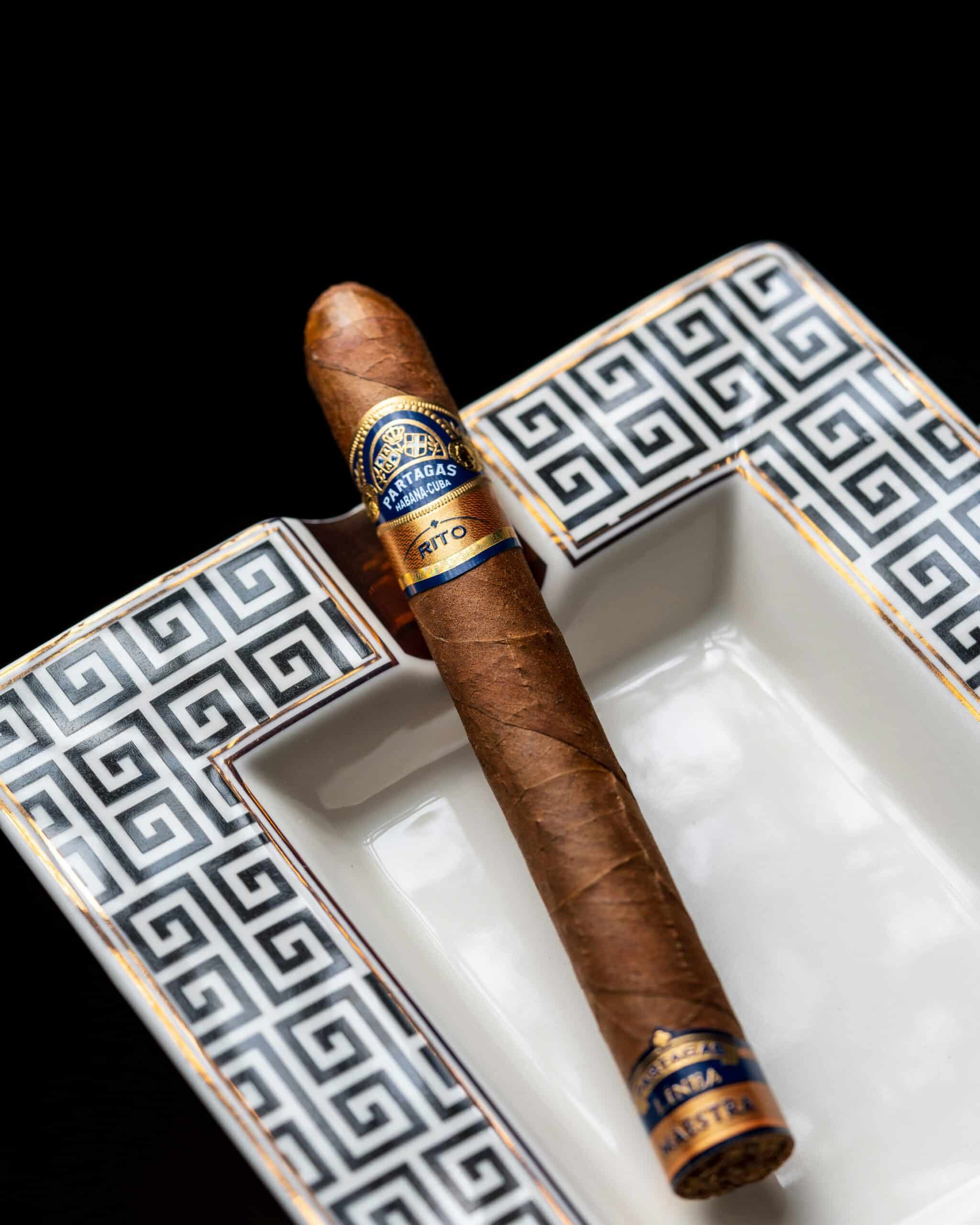
I am holding the February 2005 issue of Cigar Aficionado, “the good life magazine for men,” as it describes itself, with both the “c” and “a” in lowercase. Its cover bears the headline “BEST CIGARS OF THE YEAR,” in capital letters. After leafing through a plethora of advertisements for luxury goods, I turn to the magazine’s main article by its publisher and editor, Marvin R. Shanken. Among other things, I learn that the American market surpassed 300 million cigars in 2004, three times the figure recorded in 1992, when, as he notes, the cigar renaissance in the United States began. A fine example of self-reference! That was the very year he founded the magazine! A column reader, Dimos Stassinopoulos, informed me the other day that Shanken had passed away at the age of 83, on October 29. May his memory be eternal, and today we shall pay tribute to him. What did this man achieve through his creation? He built a global community around a product that, until then, had been enjoyed by only a select few, behind the closed doors of private clubs and grand estates. And what if his country had imposed an embargo on imports from Cuba, considered the “Olympus” of cigars? In his cigar rankings, he would discreetly slip those delectable Havana-made cylinders among the permitted Dominican, Nicaraguan and other cigars. Perhaps, for political reasons, he even tended to favor the latter, with a certain degree of partiality. How else can one explain the fact that the Nicaraguan Padron Serie 1926 was crowned No. 1 in 2004, while the legendary Cuban Cohiba Siglo VI came in at No. 3 and the Montecristo at No. 2, only to be relegated to eighth place? A memorial prayer for all aficionados (or lovers, in Greek). The prices of the aforementioned cigars ranged from $15 to $25!