by Christos Zabounis
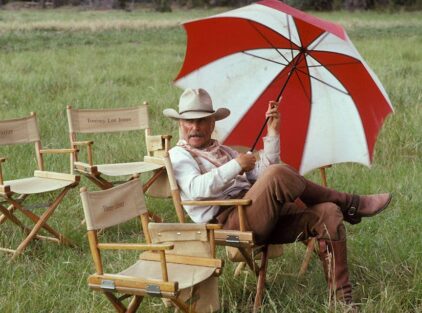
In the 1980s and 1990s, when I was living in Paris, I had set up a small “workshop” of interviews with film stars. It began at the Cannes Festival, where I timidly took part in group meetings between representatives of the press from “smaller” countries – usually five or six, such as Greece – and the leading actors of the films being presented. Gradually, thanks to building personal relationships with key figures in the film industry, I moved on to one-on-one interviews. I usually chose big names, because every time I suggested interesting creators, such as David Mamet or Sydney Lumet, they were simply overlooked. With some hesitation, I accepted – if I remember correctly at another festival, the Festival of American Film in Deauville – the proposal to interview Robert Duvall. Back then there was no ChatGPT to look up his filmography or even Wikipedia to provide a biography, aside from a few promotional leaflets for the film. So how was I supposed to “sell” to my editor a “supporting actor,” in the sense that he had only played secondary roles? Fortunately for me, that editor was a fan of The Godfather and had noticed the consigliere Tom Hagen, the adopted son of the Corleone family. That became the basis of our long conversation, filled with untold stories from the filming and praise for Francis Ford Coppola, who had discovered him. Reading his obituary today, I feel guilty about my ignorance back then. It wasn’t only his role in Apocalypse Now, as the war-loving lieutenant colonel who enjoys the smell of napalm, or as the aging cowboy in Open Range by Kevin Costner. It was that I neglected to ask him the most important thing: how, after dozens of films, he decided to invest all his savings and make The Apostle as its lead actor, screenwriter, director, anda, and producer. “First among the seconds,” as The Hollywood Reporter called him, finally became, simply, first.
 Popular