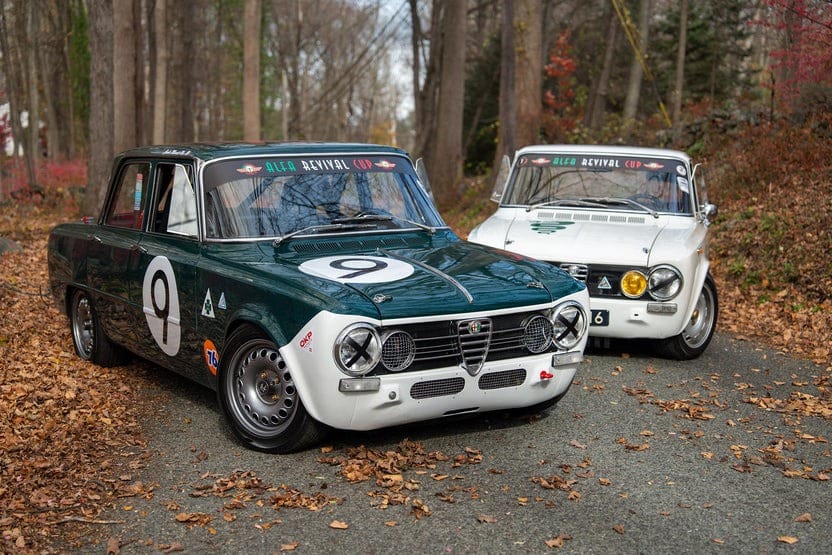
Mike Marett’s relationship with his Alfa Romeo Giulia Super didn’t begin as a romantic passion story, but as a practical plan. The goal was clear: prepare the car for the Targa Newfoundland, one of the most demanding road rallies in North America. The Giulia was purchased as a project – a platform to be upgraded, reinforced and transformed into a reliable rally machine.
The preparation was serious. A fuel cell and fire suppression system were installed, and the classic Alfa twin-cam inline-four was fully rebuilt to ensure durability under competitive conditions while preserving its high-revving character. This wasn’t a cosmetic refresh; it was a mechanical resurrection.
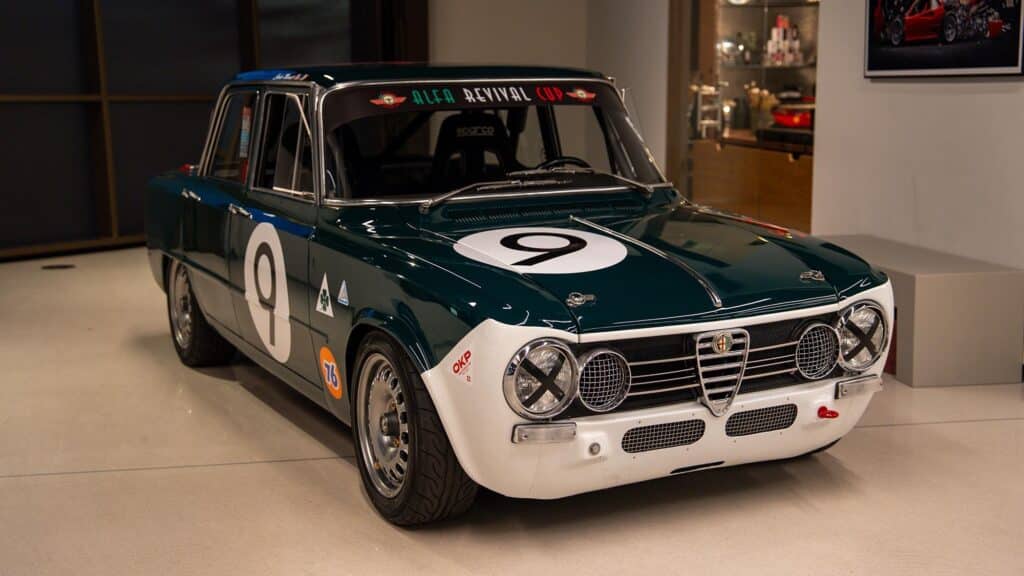
Then the event was canceled. The pandemic reshaped the plan, and the Giulia never reached the start line. Instead of timed stages, it faced a different kind of test: a ten-hour drive from Ohio to Connecticut. On that open road, free from competition pressure, the car revealed its true personality.
With communicative steering, a precise manual gearbox and the unmistakable sound of the twin-cam climbing through the rev range, the Giulia delivered a purely analog driving experience. No electronic filters, no artificial enhancements – just driver, machine and road.
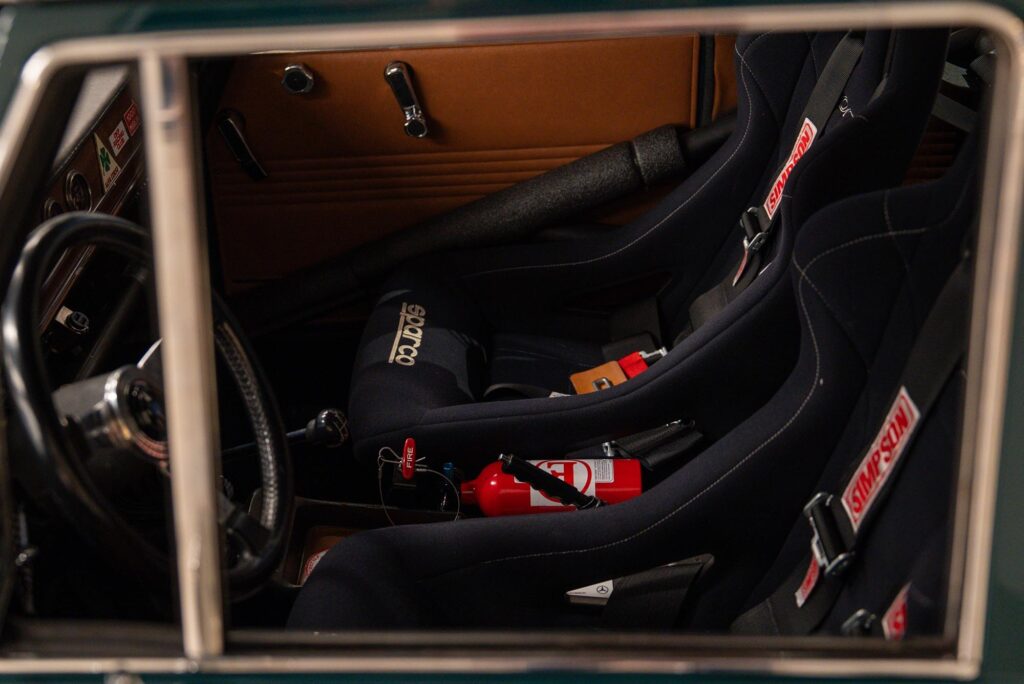
What began as a competition tool evolved into something deeply personal. The Giulia was no longer a project but a companion. Its intelligent simplicity and chassis balance were reminders of an era when driving pleasure stood at the heart of automotive design.
This story is not just about a classic Alfa Romeo. It’s about the moment when a car stops being an object and becomes an experience – when the ambition to compete gives way to the joy of the journey, and an “accidental” Alfa changes a driver’s life forever.
 Popular