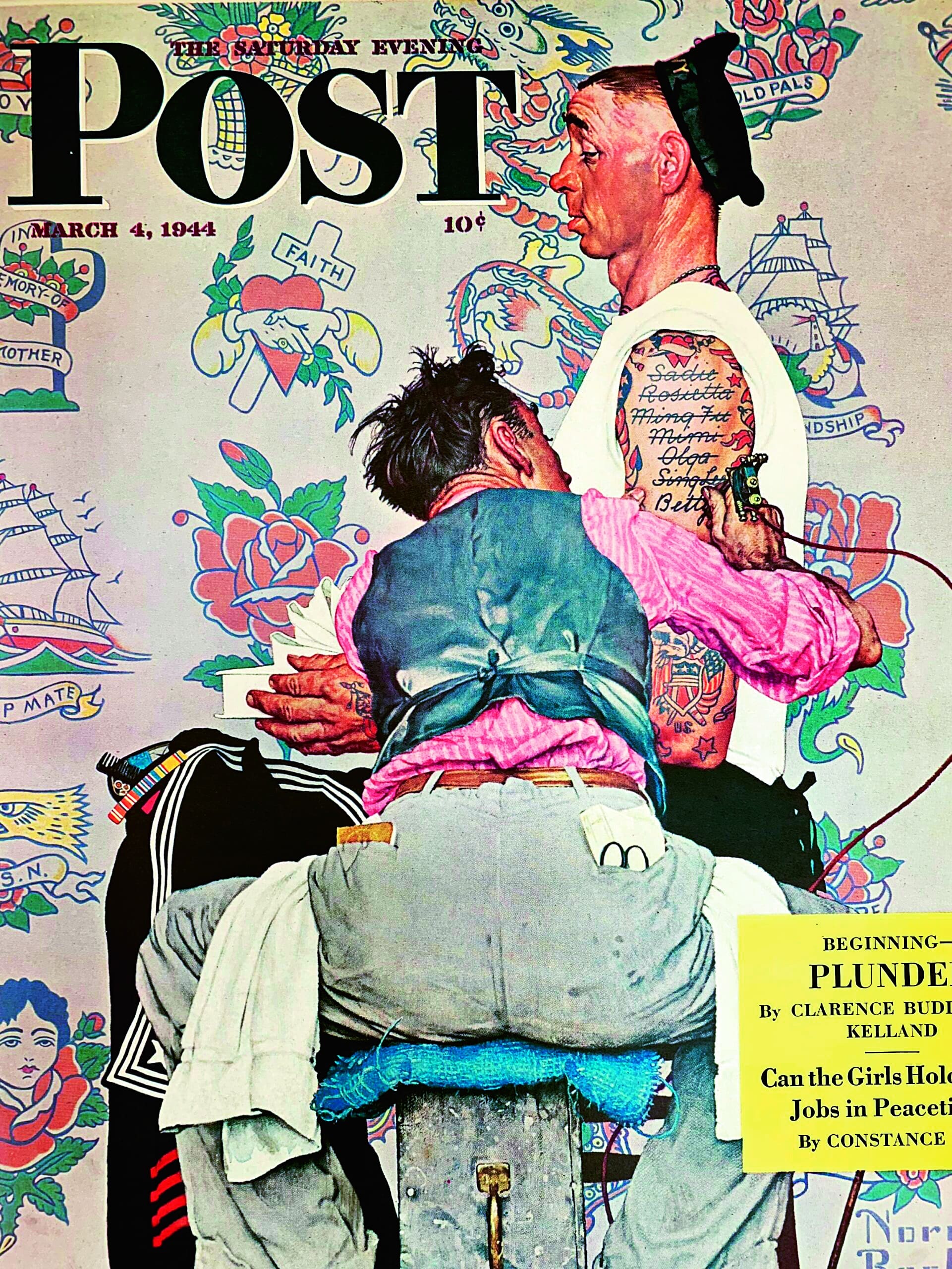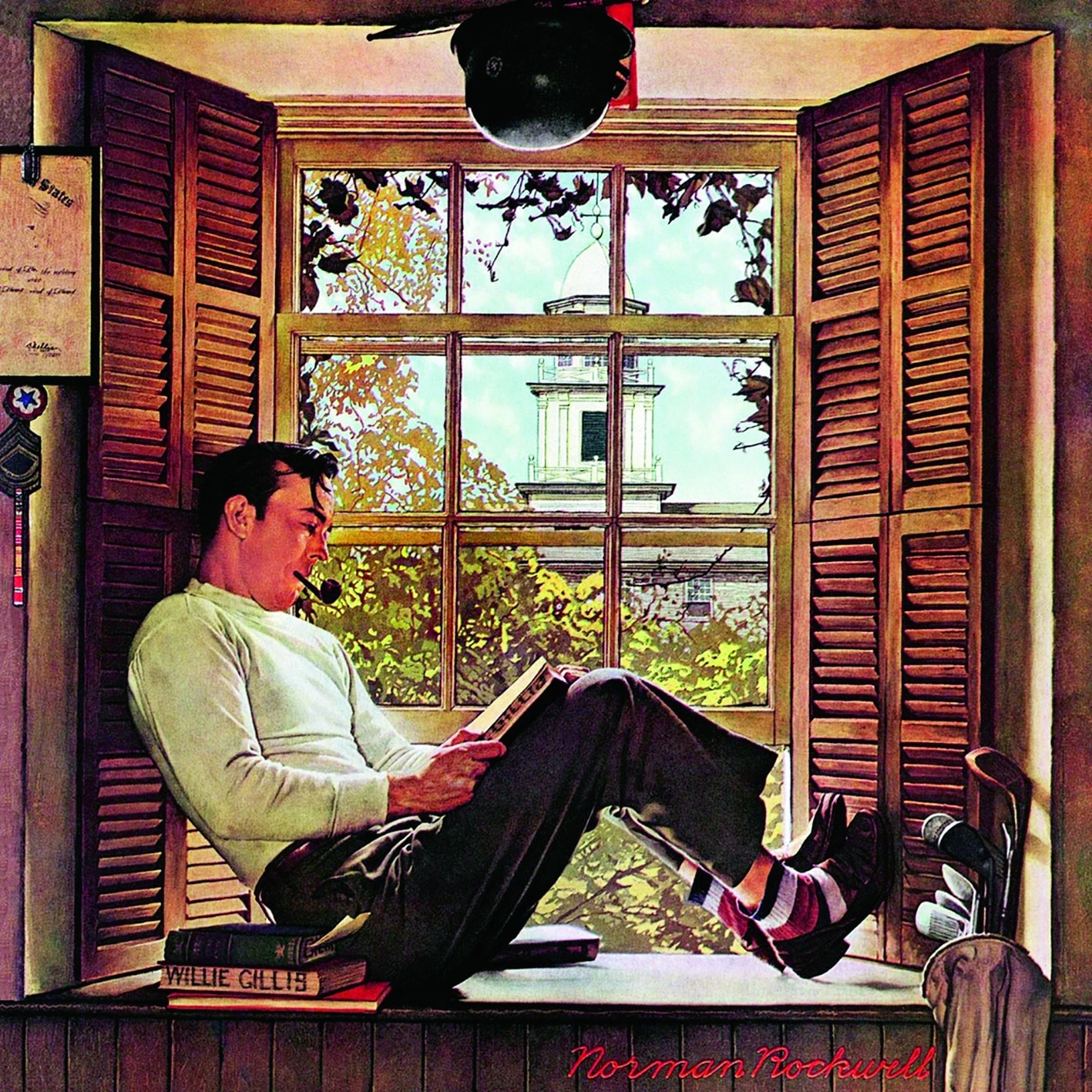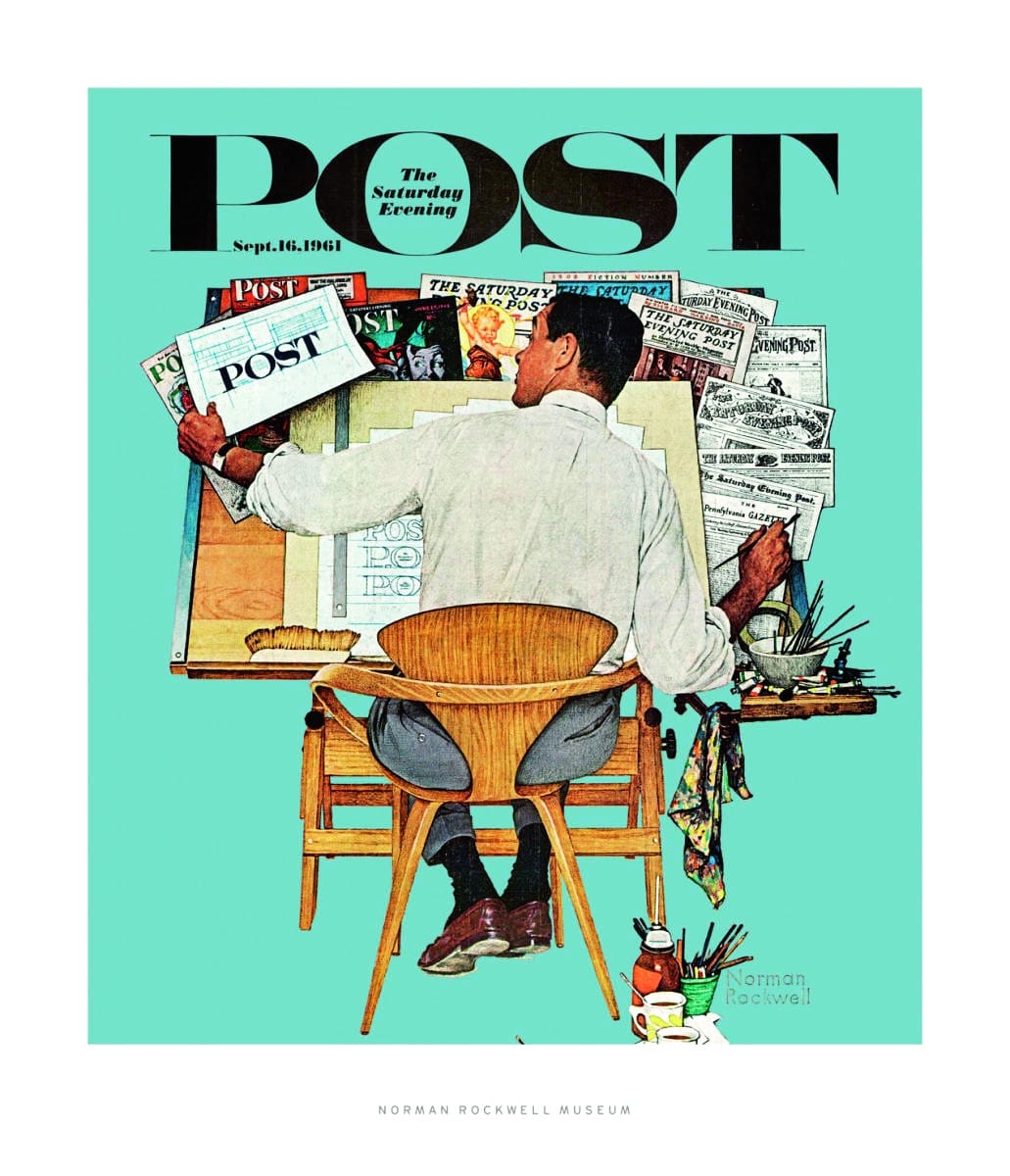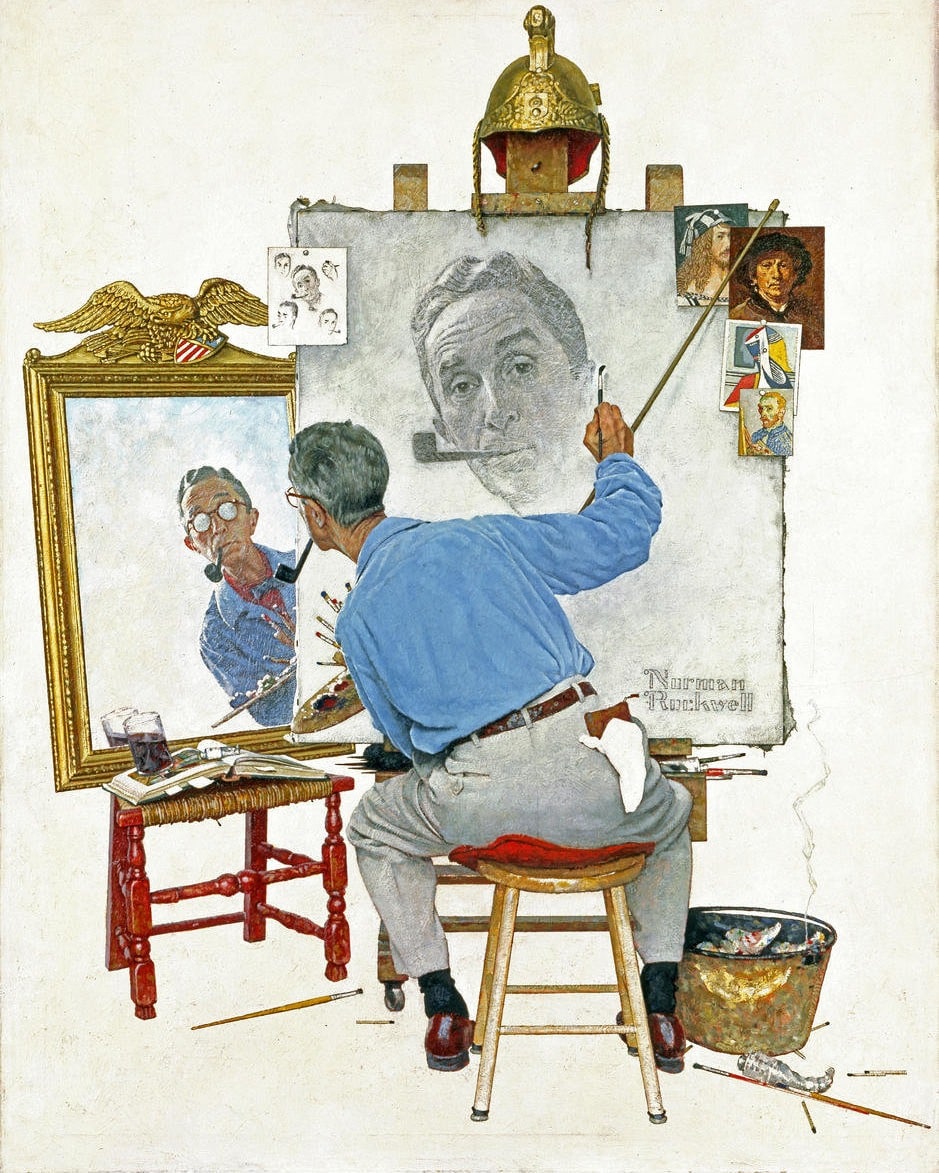
Norman Rockwell (1894–1978) was not merely an illustrator—he was the visual ethnographer of everyday American life, an artist who transformed The Saturday Evening Post into a window onto an idealized yet profoundly human reality.
by Katerina Romanou
Rockwell’s work was distinguished by an almost archaeological attention to detail. He drew inspiration from ordinary people—his neighbors in Stockbridge, Massachusetts—whom he often used as models. His process was meticulous: he staged scenes with real people, photographed them from dozens of angles, and then translated their essence onto canvas. Working primarily in oil paint, he achieved a polished, almost three-dimensional quality in his images, where every wrinkle on an elderly face or every stain on a child’s clothing told an entire story.
In the iconic Freedom from Want, Rockwell captured the essence of gratitude, while in The Problem We All Live With (1964), he demonstrated that his art could also serve as a powerful tool for social change. The image of young Ruby Bridges walking to school, escorted by federal marshals, remains one of the most moving visual records of racial segregation in America.
His style, often described as “Rockwellesque,” combined realism with a touch of narrative sentimentality. He did not simply paint what he saw, but what he believed life ought to be. This ability to condense entire dramas into a single frame profoundly influenced later generations of creators. Filmmakers Steven Spielberg and George Lucas, architects of modern American mythology, have acknowledged the impact of Rockwell’s composition and narrative clarity on their cinematic vision.
Despite his immense success, Rockwell lived in an era of striking contradictions. While his magazine covers radiated a sense of comfort and security, he frequently struggled with depression and sought help from the renowned psychoanalyst Erik Erikson. This inner complexity may be what lends his work a subtle melancholy—a recognition that the “perfect moment” is always fleeting.
Today, his paintings are no longer regarded as mere illustrations but as invaluable documents of a lost innocence. Rockwell succeeded in making the ordinary seem sacred, reminding us that the story of a nation is written not only on battlefields but also around kitchen tables, in classrooms, and in the eyes of people dreaming of a better tomorrow.
1
His process was meticulous: he staged scenes with real people, photographed them from dozens of angles, and then translated their essence onto canvas.
2
Living Room
In The Problem We All Live With (1964), he demonstrated that art could become a powerful social instrument. The image of young Ruby Bridges walking to school, surrounded by federal marshals, remains one of the most compelling depictions of racial segregation in America.