RADIO
| RADIO SHOP
CONTACT
Travellers Attitude · International Style Society

War correspondent

Photo by

Photo by

by Lambis Tagmatarhis

What does Ares, the god of war, have to do with Ares Messinis, war correspondent and Chief Photographer for AFP in Greece?

None at all. People call me Ares because my full name is Aristotelis. He lived on Mount Olympus; I live in Thessaloniki. His father was Zeus and his mother Hera. My father is Dimitris Messinis, a photojournalist, and my mother is Pepi Messini, a journalist.

And yet, both of you make a living from war.

Yes. The difference is that he spreads war, while I fight against it.

How did you become a war correspondent?

I suppose it’s somewhat hereditary.

Did you study photography?

Essentially, I’m self-taught.

What was your first job?

I started as a sports photographer, covering the “battlefields” of stadiums: basketball, football, volleyball. Later, I had the opportunity to do an internship at the Associated Press.

Was your father a photojournalist?

Yes. At first, he worked for Greek newspapers. When the wars in the Balkans began, in Kosovo and Bosnia, he started collaborating with the European Pressphoto Agency (EPA). Later, the Associated Press recruited him, and that is where he finished his career.

And your mother?

She mainly covered court reporting.

How did your parents react when you decided to become a war correspondent as well?

To be honest, it was difficult for them. But then again, what can someone say when they’ve done exactly the same thing themselves?

When you’re on assignment, do they worry constantly?

I imagine they do. But so do I.

Is there a secret to surviving on the front line of a war?

Of course there is: be lucky.

What is life like in a country at war? I’m not talking about the front line.

Life goes on in a country at war. It has to.

Isn’t there constant fear?

The fear is there. Then you get used to it. It becomes part of your daily life. And within that reality, you continue living.

Can you really get used to fear?

It becomes part of your life.

Have you gotten used to it?

Yes, I have. I’m always afraid, but fear is part of the job and part of everyday life there. The point is to learn how to live with it. To use it as an advisor. It shouldn’t paralyze you, but neither should you eliminate it entirely and make a fatal mistake.

Have you ever told yourself, “Don’t be afraid, I really want this shot”?

That happens all the time. When you put the camera to your eye, you automatically isolate yourself and lose, at least to some extent, awareness of what’s happening around you. What saves you is synchronizing your thinking with your sense of danger—knowing where you are and how you’re moving.

How can your thinking help when bombs are exploding around you?

Bombs are a more general threat. You may be relatively protected, but bad luck can strike at any moment.

Meaning?

A bomb can hit exactly where you are. It can hit the building you’re sheltering in. The building can collapse on your head—and that’s the end.

What about on the front line?

What we call a street fight, with conventional weapons. There, one wrong step can cost you your life. Everything can cost you your life: your passion, your ignorance, your panic.

Have you experienced that?

I’ve seen people, colleagues, while bullets were whistling all around us, suddenly start running without knowing where they were going. They were in shock.
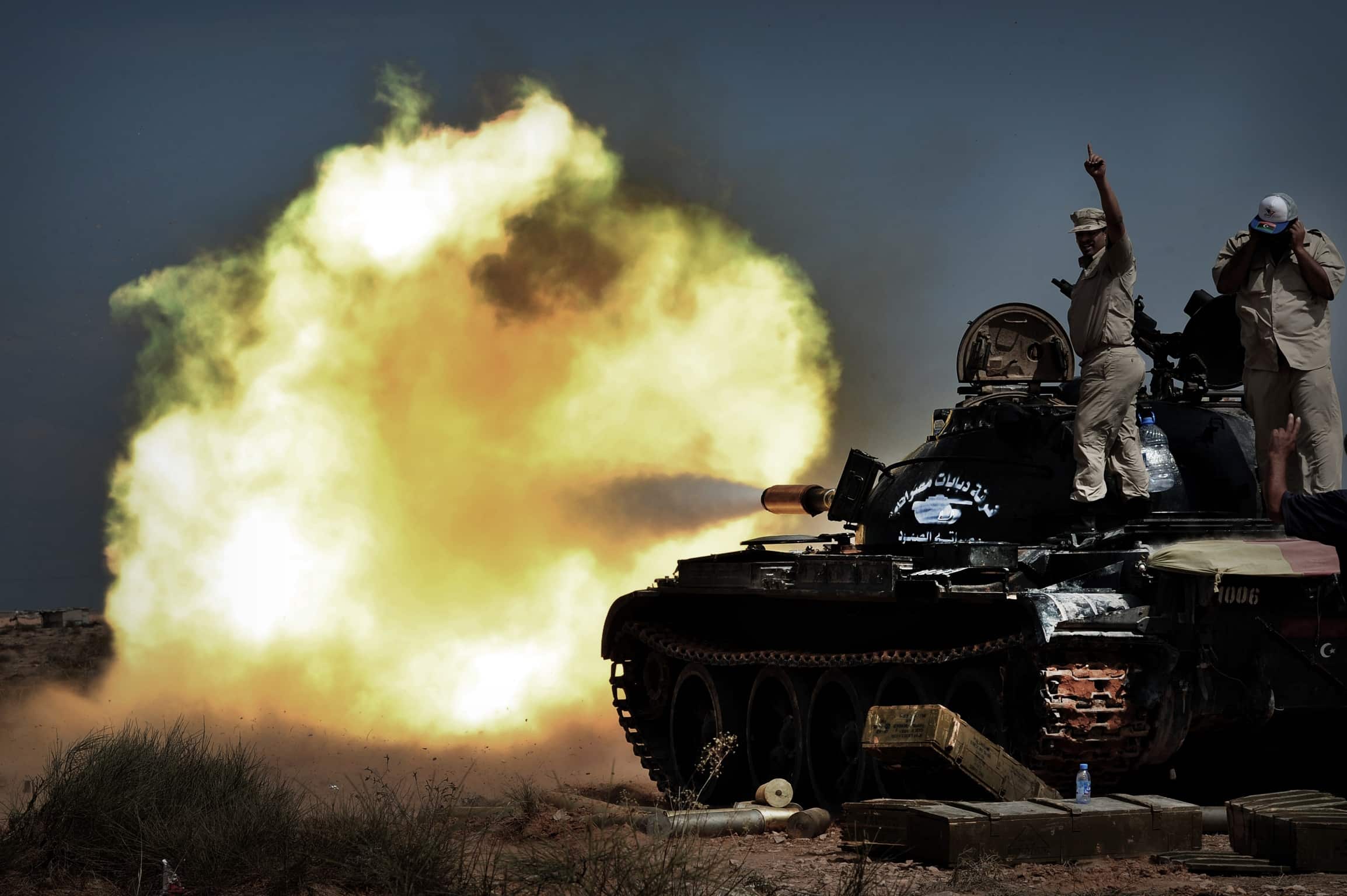
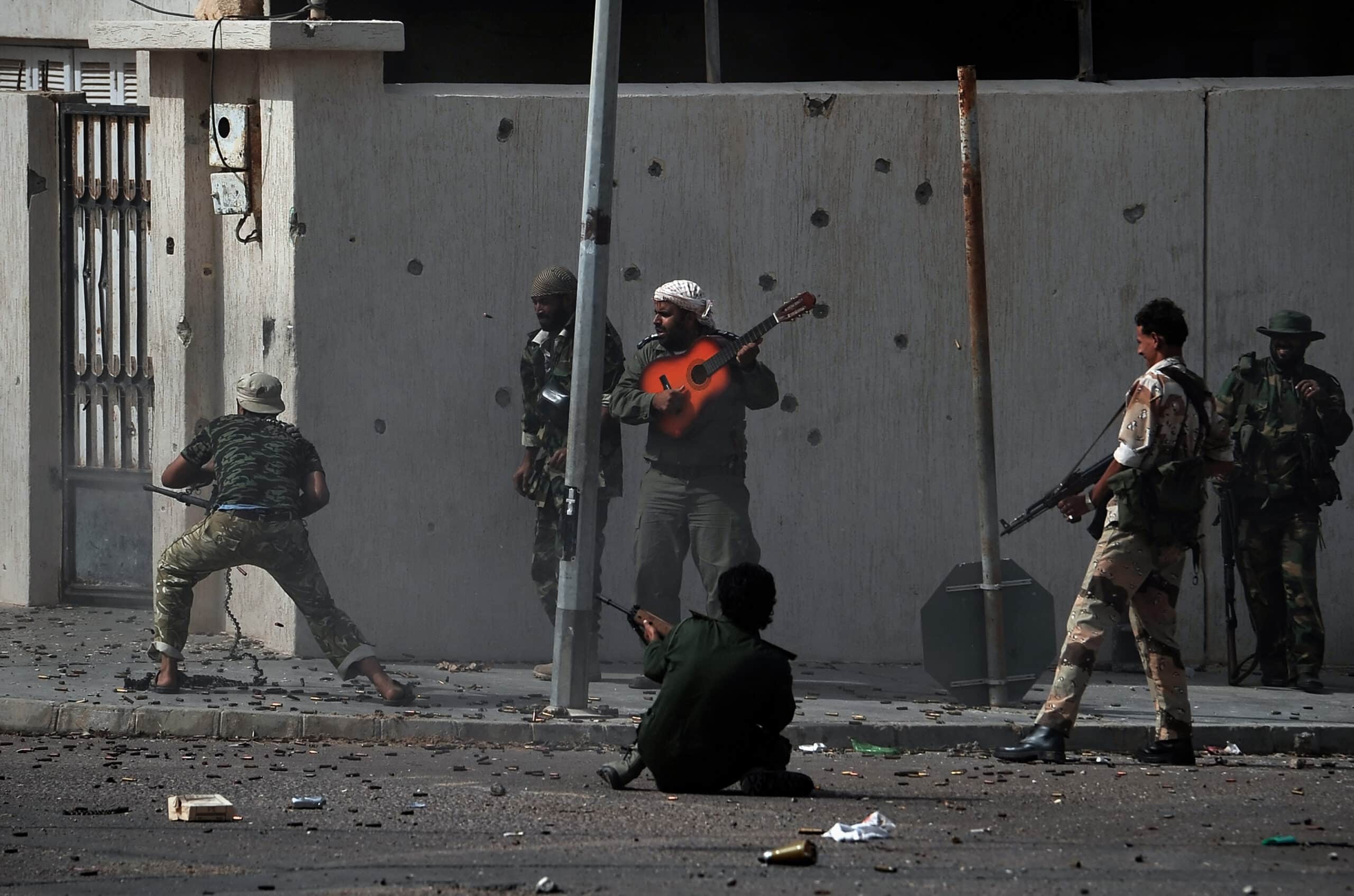
A National Transitional Council fighters fire with a tank against troops loyal to Moamer Kadhafi in the town of Sirte on October 04, 2011. AFP PHOTO / ARIS MESSINIS

A National Transitional Council fighters fire with a tank against troops loyal to Moamer Kadhafi in the town of Sirte on October 04, 2011. AFP PHOTO / ARIS MESSINIS

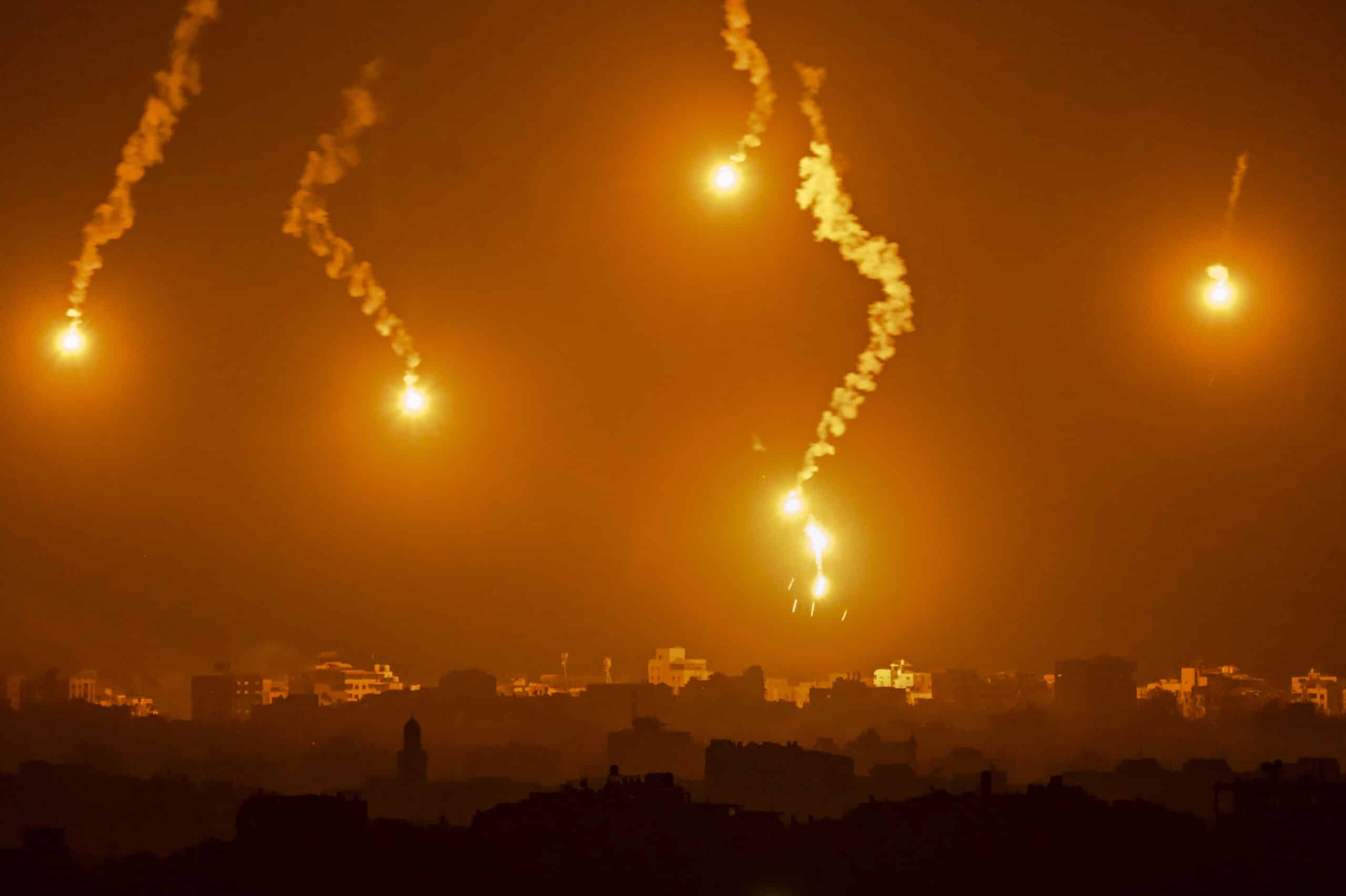
This picture taken from Sderot along the border with the Gaza Strip early on November 5, 2023, shows flares over the Palestinian enclave during an Israeli strike, amid ongoing battles between Israel and the Palestinian Hamas movement.

This picture taken from Sderot along the border with the Gaza Strip early on November 5, 2023, shows flares over the Palestinian enclave during an Israeli strike, amid ongoing battles between Israel and the Palestinian Hamas movement.

How close can a war correspondent get to the front line? Right beside the soldier?

Exactly. Just look at my photographs.

Do they actually allow you that access?

The real question is what access they are willing to give you and how close you yourself choose to get.

If access is granted?

I weigh the risks. But almost always, even with considerable danger, I cover the story.

How easy or difficult is it to wake up every morning and head back to the front line? Do you return each day or stay there?

It depends on the circumstances. If I can leave, I leave. I’d rather sleep three hours somewhere relatively safe than remain in a place where a raid, an assault, or an attack could happen during the night and get you killed—or kidnapped.

Have you ever found yourself trapped emotionally, wondering, “What am I even doing here?”

You realize the reality of it from the very first moment. When you’re dealing with death—especially unjust death—it is violent and traumatic. Soldiers are there either by choice or because it’s their job to fight in those conditions. But civilians, dead children, mutilated bodies, displacement—those are things no one can ever get used to.

Nor have they chosen it.

Exactly. That’s where something breaks inside you. Then you struggle with yourself. With the path you’ve chosen. With the purpose you’ve committed yourself to. Because there is a purpose.

What is that purpose?

We do war reporting for anti-war reasons. We want to awaken people’s conscience. We want those living comfortably and safely to understand what war really is and what suffering it causes.

To convey the horror of war so it stays as far away from people’s lives as possible?

Yes. We want people not to fall for those who try to sell them war. Because in war, it is almost always the ordinary people who pay the price. The civilian population.

I’ll ask again: can you endure all this?

You cannot avoid being broken by it. I grit my teeth. I believe in what I do, in its value and purpose. There have been times when I was taking photographs while crying. Times when I was so angry I wanted to smash everything around me. But the moment demands documentation. It demands that the information—the horror—be recorded and transmitted.

Are there photographs you’ve taken that were never published?

Many. A great number of photographs never make it into the media.

How many major international news agencies are there?

Three major ones: Agence France-Presse (AFP), Reuters, and the Associated Press.

And they distribute the photographs?

Not exactly. News agencies produce the material. We are the source of the news. Media outlets—websites, newspapers, television channels—subscribe to our services. From the material we provide, they choose whatever they want to publish.

Would you say that the media generally prefer easier-to-digest images?

Usually, yes. They are afraid of shocking their readers. Now, how much the human eye should be shocked by the truth is something we need to work on. Because what is happening is the truth, not fiction. And that is exactly what we want: to shock the reader enough to understand what is happening in the world beyond the beautiful, protected environment of their home.

How long have you been a war correspondent?

I’ve been working for twenty-seven years. Seventeen of those as a war correspondent. Add the apprenticeship I did in sports photography before that.

Did sports photography feel similar to war reporting?

Of course. Though driving a motorcycle through downtown Athens is probably a more dangerous combat zone than anything else.

How many wars have you covered?

Six wars, and I’ve returned to each of them multiple times.

Have you lost friends and colleagues?

I’ve lost friends who were like brothers to me. In Ukraine, I lost my partner, a thirty-two-year-old young man, to a rocket attack. I also lost another dear friend, James Foley, the first journalist publicly beheaded by ISIS on camera. He had been kidnapped, and for a year and a half we searched for him. Then they decided to take his head on camera.

Do combatants help you when they see “PRESS” written on your bulletproof vest?

You’re actually the perfect target for the other side. You’re also an excellent kidnapping target for ransom. That happened frequently in the Middle East with ISIS. And let’s not forget what still happens today. In Lebanon, only a few days ago, a journalist was deliberately targeted and killed.

What about the rules of engagement?

The rules that supposedly exist—the idea that journalists are somehow protected—are things we tell ourselves from the safety of our homes. Once you’re on the ground, there are no rules. There are no non-targets. Schools, hospitals, journalists, civilians—everyone can become a target.

And what about international humanitarian law?

That’s a joke.

Why do they attack schools and hospitals?

Because when someone is hunting you, you have to hide somewhere. If you hide in a hospital—or if they believe you did—there is no mercy.

Since becoming a war correspondent, has peace become more important to you?

Absolutely. But I’ve also become a much angrier person because of what I’ve witnessed.

Do you remember your first assignment?

I was in Egypt just after Mubarak fell. Then the coup happened, the army took to the streets, and at the same time the Arab Spring and the Libyan civil war were beginning. I was covering events in Egypt and traveling daily to the Libyan border to report on the refugee crisis. From the border I eventually found myself in the heart of the Libyan civil war, filling in for a colleague who had been kidnapped by Gaddafi loyalists for ransom.

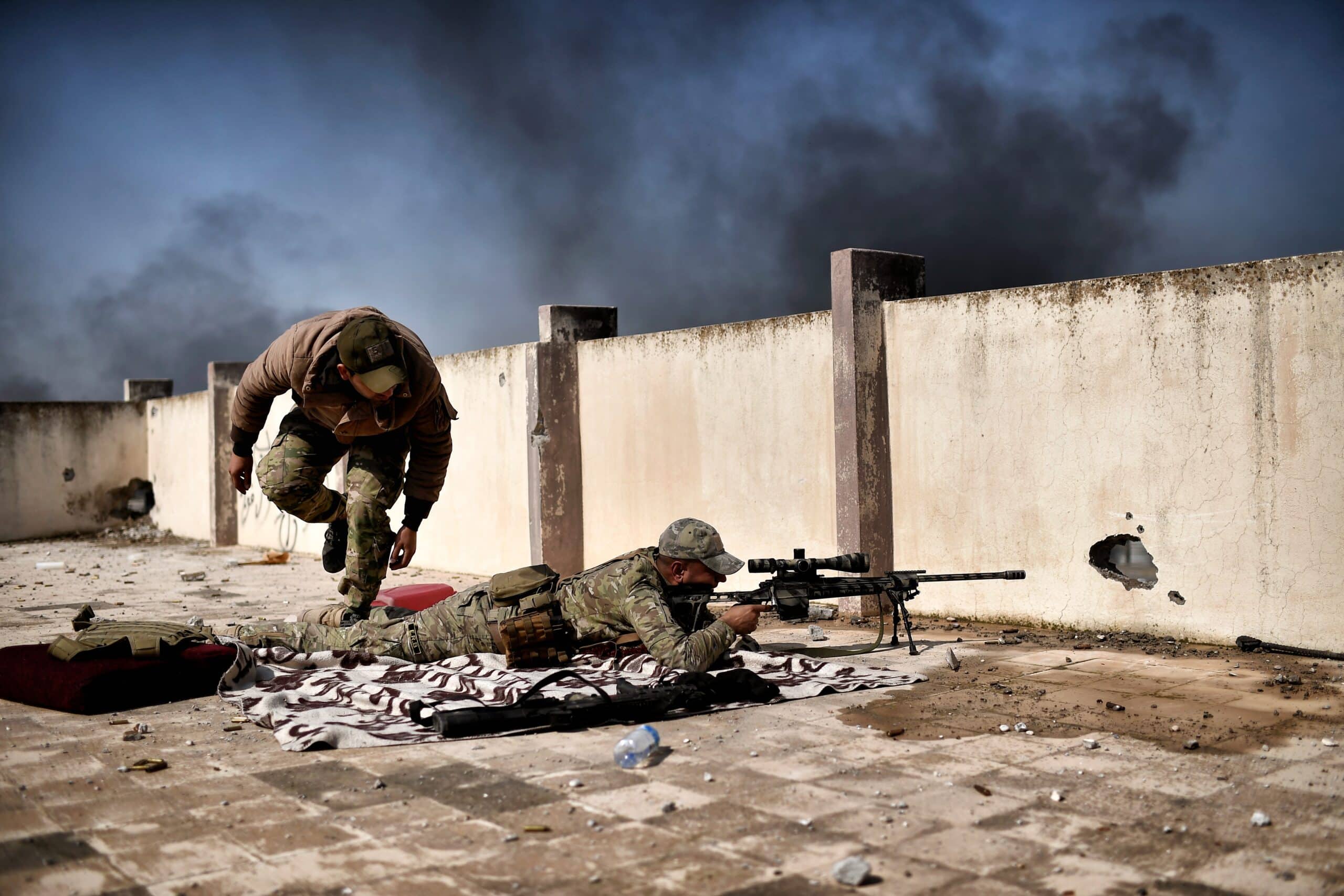
A sniper fires at targets during clashes with Islamic State (IS) group fighters in Mosul on March 5, 2017, during an offensive to retake the western parts of the city from the jihadists.
Iraqi forces attacked four jihadist-held areas in Mosul, the latest push in a battle for the city's west that has displaced more than 45,000 people since it began. / AFP PHOTO / ARIS MESSINIS

A sniper fires at targets during clashes with Islamic State (IS) group fighters in Mosul on March 5, 2017, during an offensive to retake the western parts of the city from the jihadists. Iraqi forces attacked four jihadist-held areas in Mosul, the latest push in a battle for the city's west that has displaced more than 45,000 people since it began. / AFP PHOTO / ARIS MESSINIS

Photo by Aris Messinis

Photo by Aris Messinis

What is the most difficult moment you’ve ever experienced? The one that felt like a nightmare.

The most difficult moments are the ones you survive purely by luck. There have been many. But emotionally, the hardest moments are seeing dead children, especially when you have children of the same age yourself. That is unbearable. And I haven’t only experienced it in wars. We saw it here in Greece during the refugee crisis, on the islands, with drowned babies washed ashore by the sea.

And apart from the emotionally difficult moments?

I’ve escaped death many times on the front line. I’ve even stepped into a minefield and had to find my way out. Every step was like…

Russian roulette?

Exactly. I’ve been trapped by snipers and by explosions.

How do you realize you’re trapped by a sniper?

When the first bullet passes in front of you. When you hear its sound in your chest. When it burns past your face and you hit the ground. Then you hear more shots hitting the walls around you. You’re under cover and you think: “This is it. It’s over.”

And explosions?

People beside you die, while you survive purely by chance. You know that all it takes is a single fragment to cut you in half, take off a leg, or do anything else.

Would you describe yourself as a lucky person?

I don’t consider myself lucky. But judging by the outcome, it seems I am very lucky indeed.

Is there one image or story from war that has never left you?

There are too many. Not just one. The feeling of being trapped in a minefield, for example. Unable to move forward, unable to go back. That’s a nightmare.

Are civil wars more dangerous?

Civil wars are bloodier because they involve more hatred.

What is something I don’t understand about war that you do?

That no war is fought for the benefit of ordinary people. And ordinary people are always the ones who pay the price.

What is the greatest moral dilemma you’ve faced as a war correspondent?

Photographing civilians during their most personal moments.

For example?

A father holding his dead child. A mother crying over her child’s grave. On one hand, you take the photograph so that no one else in the world has to experience the same thing. On the other, it can feel as though you’re violating their grief.

How do you return to normal life after an assignment?

That’s difficult. It takes days to realize that you’ve returned to your own world, which is completely different.

Do you come back wiser?

Yes. But it’s not easy to share that wisdom. That’s the difficult part. You learn that the true value of life is simply waking up, seeing the sunrise, watching the sunset, having a plate of food, and being able to breathe. That’s the value of life.

Then you return here, to your own world, and hear complaints like: “The Wi-Fi isn’t working properly,” or “There’s nothing good on television tonight.”

When you hear a sound in battle, can you identify the weapon?

Yes. Because I’ve felt that sound.

And what color is it?

What does that matter? Every sound you hear in war is a sibling of death. When you’re on the side doing the shooting, the sound is hollow and loud. When you’re on the side being shot at, when shells and mortars are exploding around you, the sound is dry and deep.

Do people change in war?

People say humans belong to the animal kingdom. Well, I believe human beings are the cruelest animals on the planet. Animals kill to survive. Humans kill for profit and self-interest.

Why does war reveal that more clearly?

Because war is ruled by power and impunity. In war there is no punishment. And there you see human nature without restraints.

If I threw away everything you’ve told me and asked for only five words, what would they be?

“Everything in war is propaganda, except the dead.”

Thank you very much.

Thank you as well.

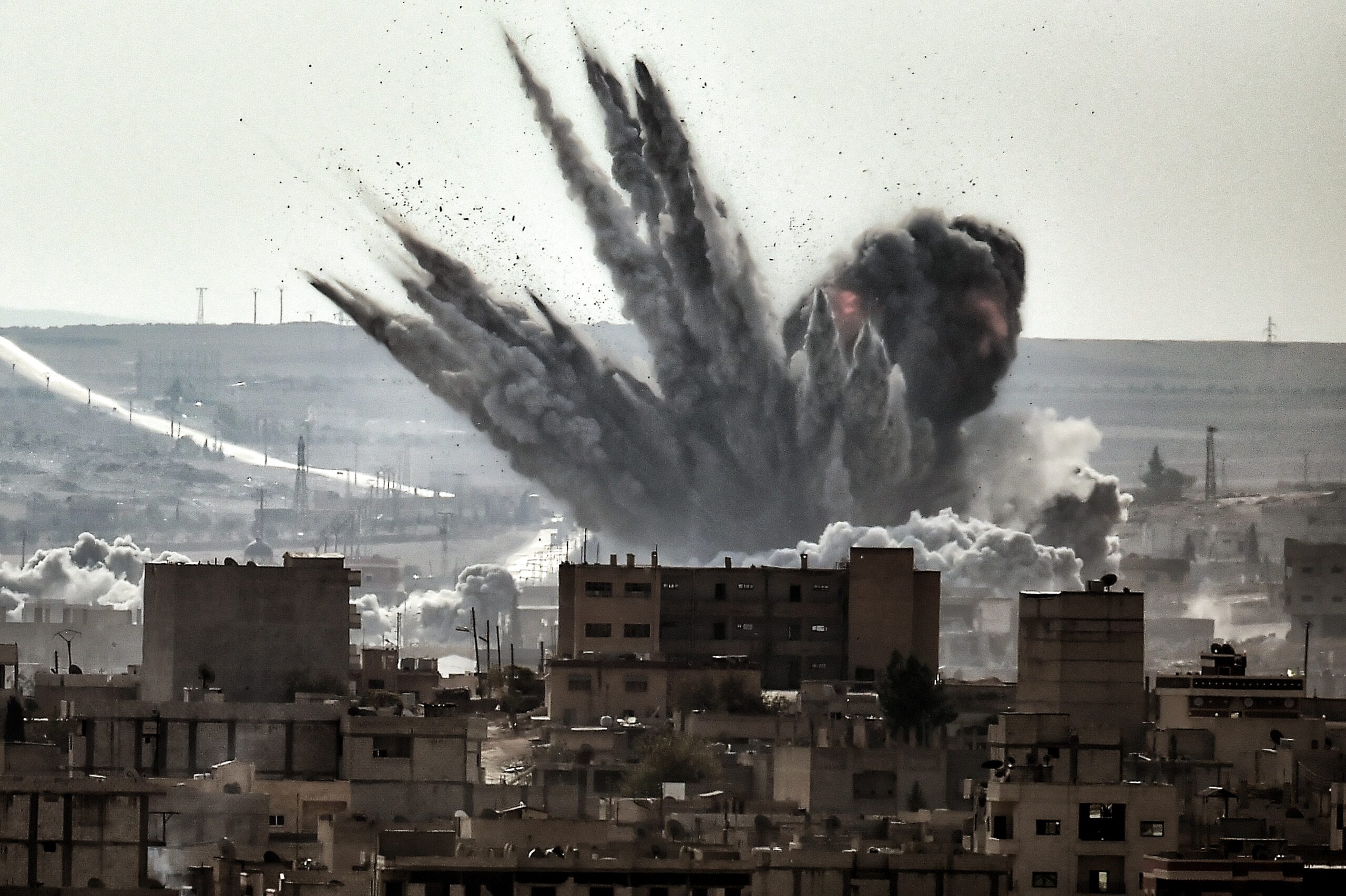
A shell explodes on November 13, 2014 in the Syrian city of Kobane, also known as Ain al-Arab, as seen from the Turkish border village of Mursitpinar, Sanliurfa province. A report issued on November 13 by the Norwegian Refugee Council and International Rescue Committee says Syrians are increasingly unable to escape their country's war as tougher policies in potential host nations are preventing them from taking refuge in the region and beyond. AFP PHOTO / ARIS MESSINIS / AFP PHOTO / ARIS MESSINIS

A shell explodes on November 13, 2014 in the Syrian city of Kobane, also known as Ain al-Arab, as seen from the Turkish border village of Mursitpinar, Sanliurfa province. A report issued on November 13 by the Norwegian Refugee Council and International Rescue Committee says Syrians are increasingly unable to escape their country's war as tougher policies in potential host nations are preventing them from taking refuge in the region and beyond. AFP PHOTO / ARIS MESSINIS / AFP PHOTO / ARIS MESSINIS

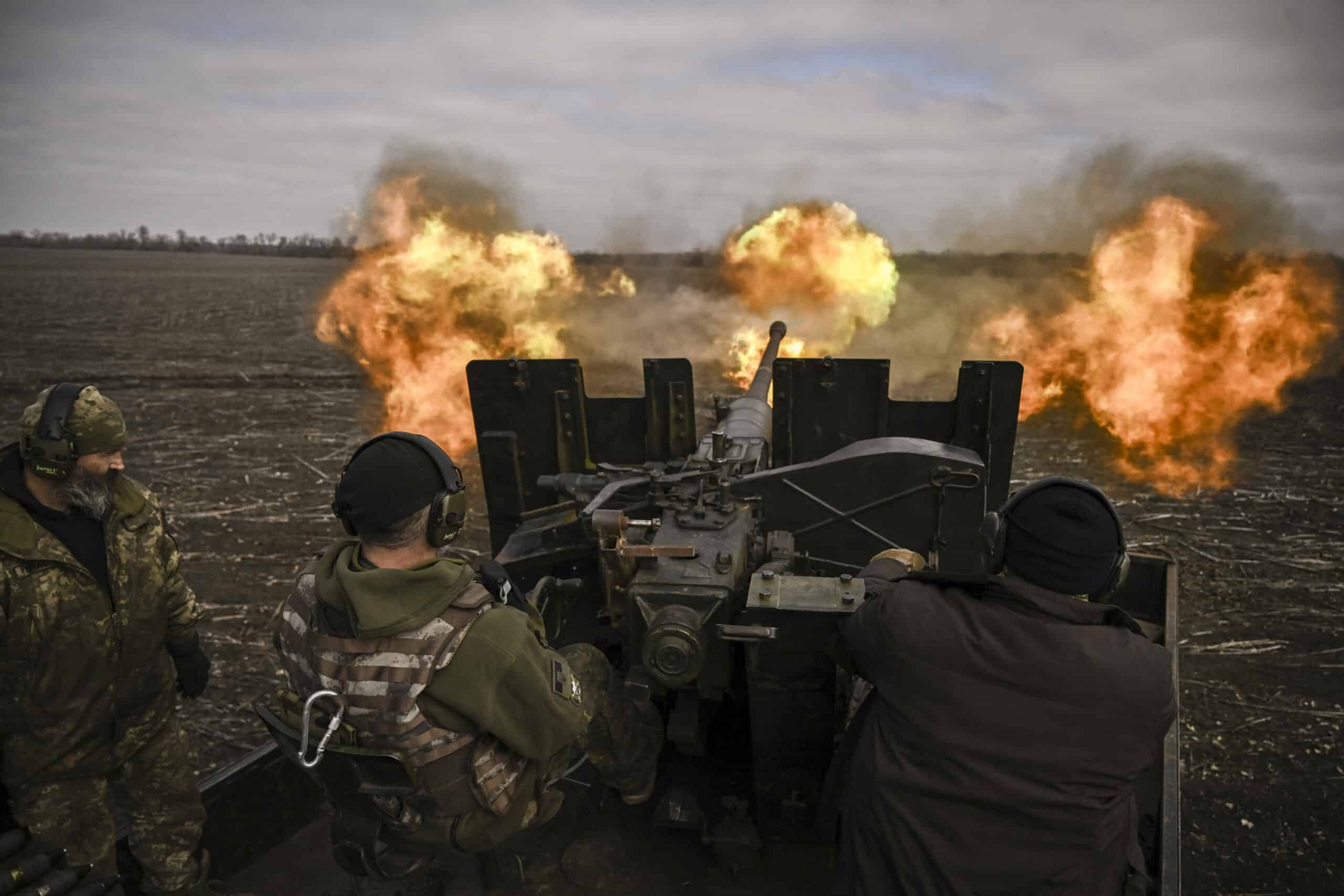
Ukrainian servicemen fire with a S60 anti-aircraft gun at Russian positions near Bakhmut on March 20, 2023, amid the Russian invasion of Ukraine. (Photo by Aris Messinis / AFP)

Ukrainian servicemen fire with a S60 anti-aircraft gun at Russian positions near Bakhmut on March 20, 2023, amid the Russian invasion of Ukraine. (Photo by Aris Messinis / AFP)