by Christos Zabounis
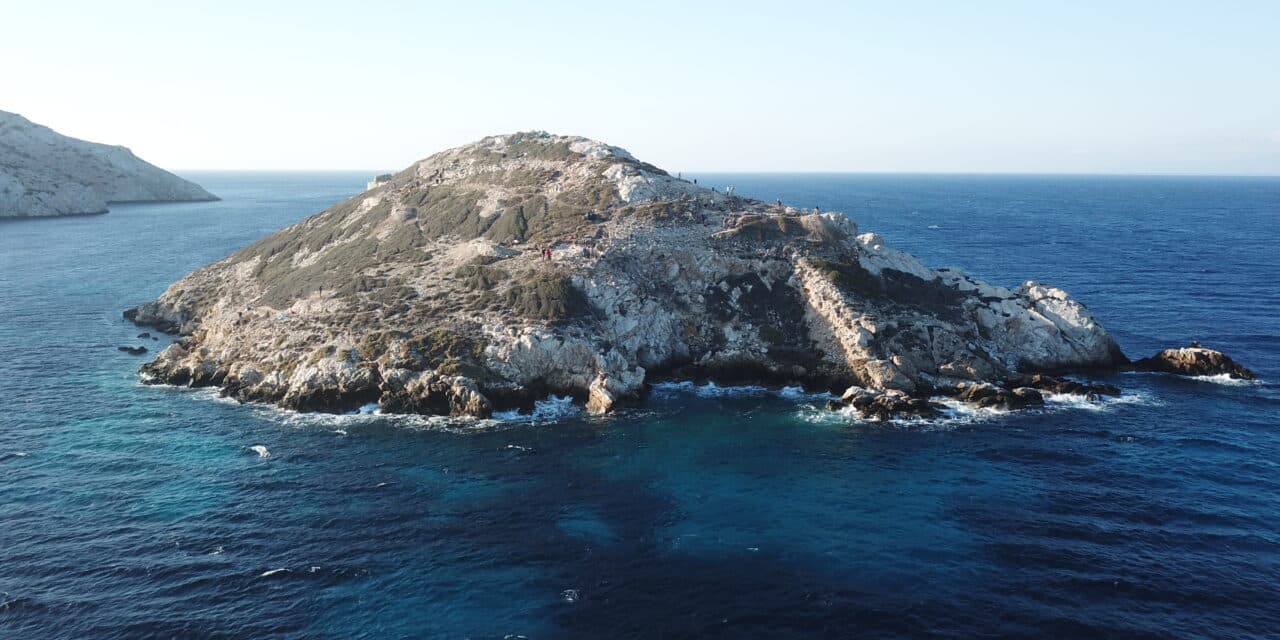
The announcement was seeking experienced archaeologists and volunteer students. “Whether you have worked with us in the past or have heard about Keros, we look forward to hearing from you if you would like to collaborate with us.” The senders were the Keros Project, a joint initiative of the Ministry of Culture (Cycladic Antiquities Ephorate), the British School at Athens, and the Cyprus Institute. Where is Keros? It is an uninhabited island in the Small Cyclades, south of Naxos and north of Koufonisia. There, during the 32nd Crossing of the Aegean Team, we encountered dozens of young archaeologists, both Greek and foreign, dancing to traditional island music accompanied by a live band in a café-restaurant in Ano Koufonisi. Speaking with some of them, we learned about one of the excavation projects being carried out at one of the most important archaeological sites of the Early Cycladic civilization (3rd millennium BC). The discoveries unearthed by the excavations continue to astonish the scientific community daily. The settlement of Daskalio, for example, impresses with its monumental buildings, some of them two-storeyed, constructed with 10,000 tons of imported marble from Naxos. Its advanced architecture for the time, along with its complex drainage and sewerage systems and the traces of metallurgical workshops, unquestionably rank it as the first religious, economic, and political center of the Aegean, centuries before the Minoan era. If one adds to this the mystery of the thousands of broken marble figurines – none of which fit together – then we are speaking of “an archaeologist’s dream.” A visit to the Museum of Cycladic Art as well as the National Archaeological Museum offers visitors a clear artistic impression of this remarkable civilization.